|
Inria Senior Researcher Team Leader President of the Inria Evaluation Commission Scientific coordinator of the Inria-DFKI partnership 3IA Côte d’Azur Chair Project-team TITANE Inria Sophia Antipolis – Méditerranée |
 |
Contact information
Pierre Alliez
Inria Sophia-Antipolis
2004 route des Lucioles BP 93
06902 Sophia-Antipolis cedex
FRANCE
Office: Y313 (Byron building)
Phone: (33) 4 92 38 76 77
Email: pierre.alliez (replace by arobas) inria.fr
My main research interests are on topics commonly referred to as Geometry Processing: geometry compression, surface approximation, mesh parameterization, surface remeshing, mesh generation and surface reconstruction. Initially considered as a subfield of Computer Graphics and Computational Geometry, Geometry Processing has developed over the last years into a whole research community seeking automatic, computerized processing of complex shapes.
I was program co-chair of the EUROGRAPHICS Symposium on Geometry Processing 2008, Pacific Graphics 2010, Geometric Modeling and Processing 2014, EUROGRAPHICS 2019 and Solid and Physical Modeling 2019.
I am the co-Editor in Chief of the Computer Graphics Forum since 2022.
Associate editor of the ACM Transactions on Graphics between 2010 and 2017, of Computer Graphics Forum between 2018 and 2021, and of Computer Aided Design between 2019 and 2021. I have been awarded in 2011 a Starting Grant from the ERC (European Research Council), entitled “IRON”, which stands for “Robust Geometry Processing”. I have been awarded in 2017 an ERC proof of concept grant, entitled “TITANIUM” (software components for robust geometry processing). I received the Eurographics Young Researcher Award in 2005.
Publications
– See google scholar
– See list of publications on HAL
– See publications on dlbp
– Publications on TITANE web site
Recent (not too old) publications:
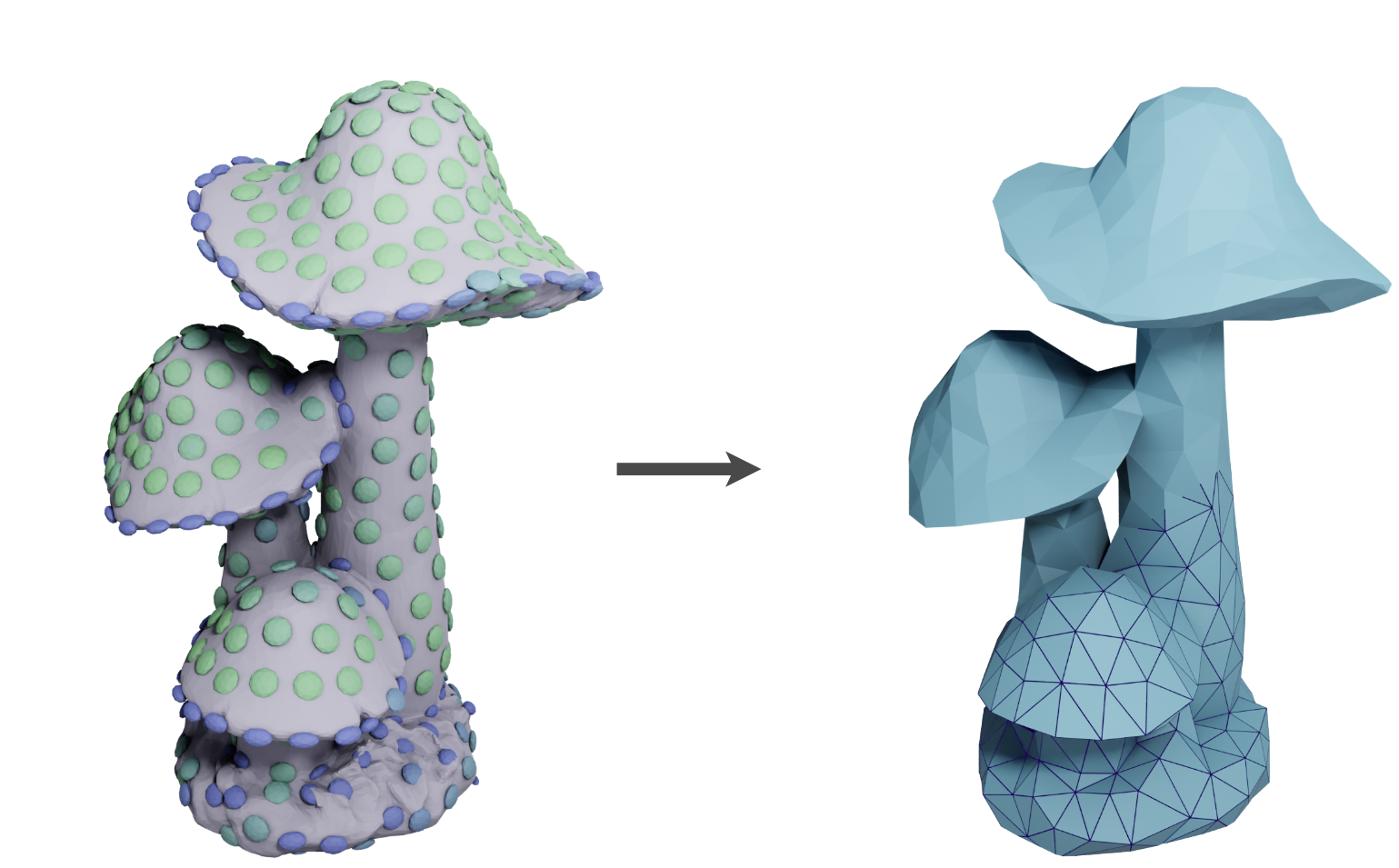 |
PoNQ: a Neural QEM-based Mesh Representation Although polygon meshes have been a standard representation in geometry processing, their irregular and combinatorial nature hinders their suitability for learning-based applications. In this work, we introduce a novel learnable mesh representation through a set of local 3D sample Points and their associated Normals and Quadric error metrics (QEM) w.r.t. the underlying shape, which we denote PoNQ. A global mesh is directly derived from PoNQ by efficiently leveraging the knowledge of the local quadric errors. Besides marking the first use of QEM within a neural shape representation, our contribution guarantees both topological and geometrical properties by ensuring that a PoNQ mesh does not self-intersect and is always the boundary of a volume. Notably, our representation does not rely on a regular grid, is supervised directly by the target surface alone, and also handles open surfaces with boundaries and/or sharp features. We demonstrate the efficacy of PoNQ through a learning-based mesh prediction from SDF grids and show that our method surpasses recent state-of-the-art techniques in terms of both surface and edge-based metrics.
Proc. Conference on Computer Vision and Patter Recognition (CVPR), 2024
|
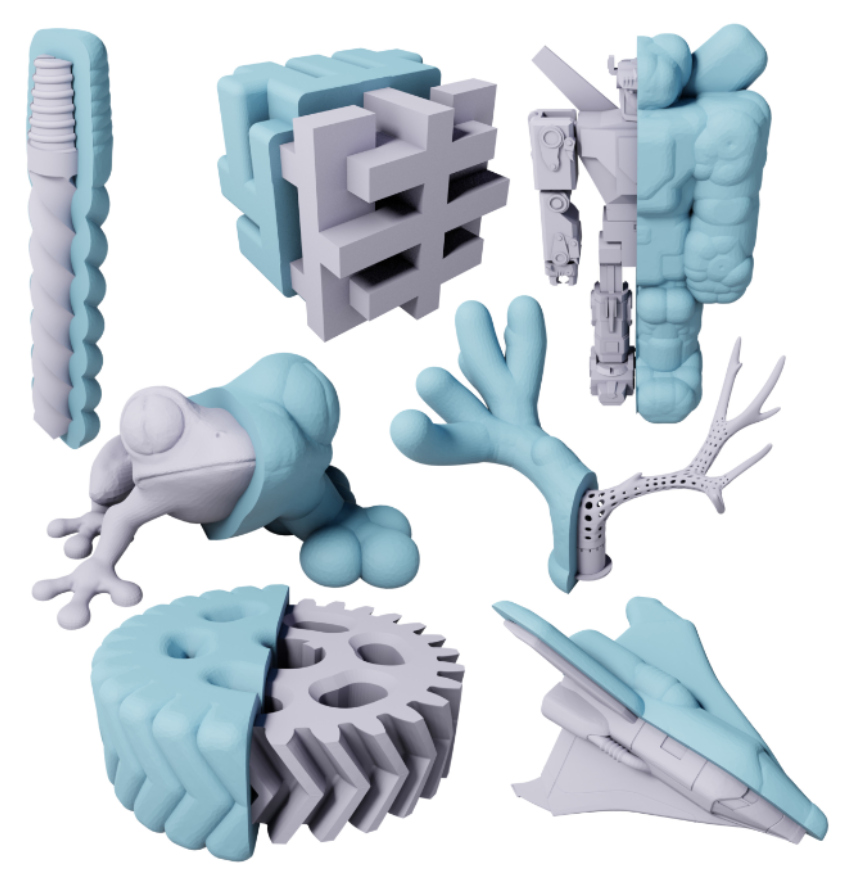 |
Feature-Preserving Offset Mesh Generation from Topology-Adapted Octrees Daniel Zint, Nissim Maruani, Mael Rouxel-Labbé, Pierre Alliez Computer Graphics Forum, 2023, Proceedings of Eurographics Symposium on Geometry Processing 2023. |
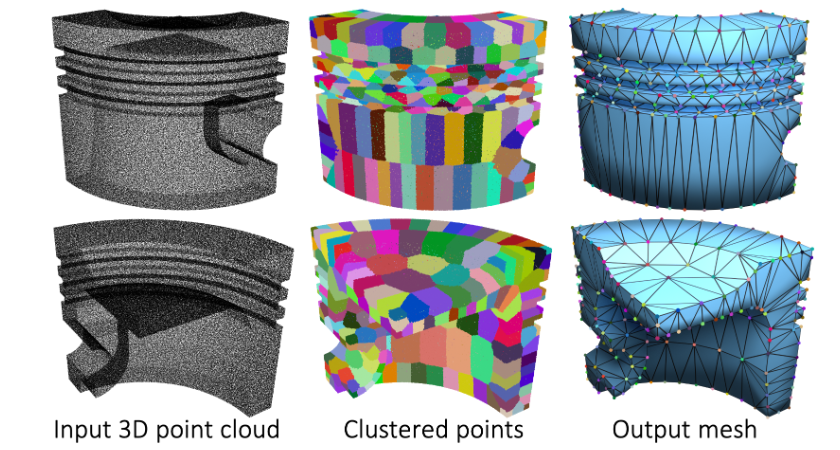 |
Variational Shape Reconstruction via Quadric Error Metrics Tong Zhao, Laurent Busé, David Cohen-Steiner, Tamy Boubekeur, Jean-Marc Thiery, Pierre Alliez ACM Transactions on Graphics 2023, to appear at ACM SIGGRAPH 2023. Project page |
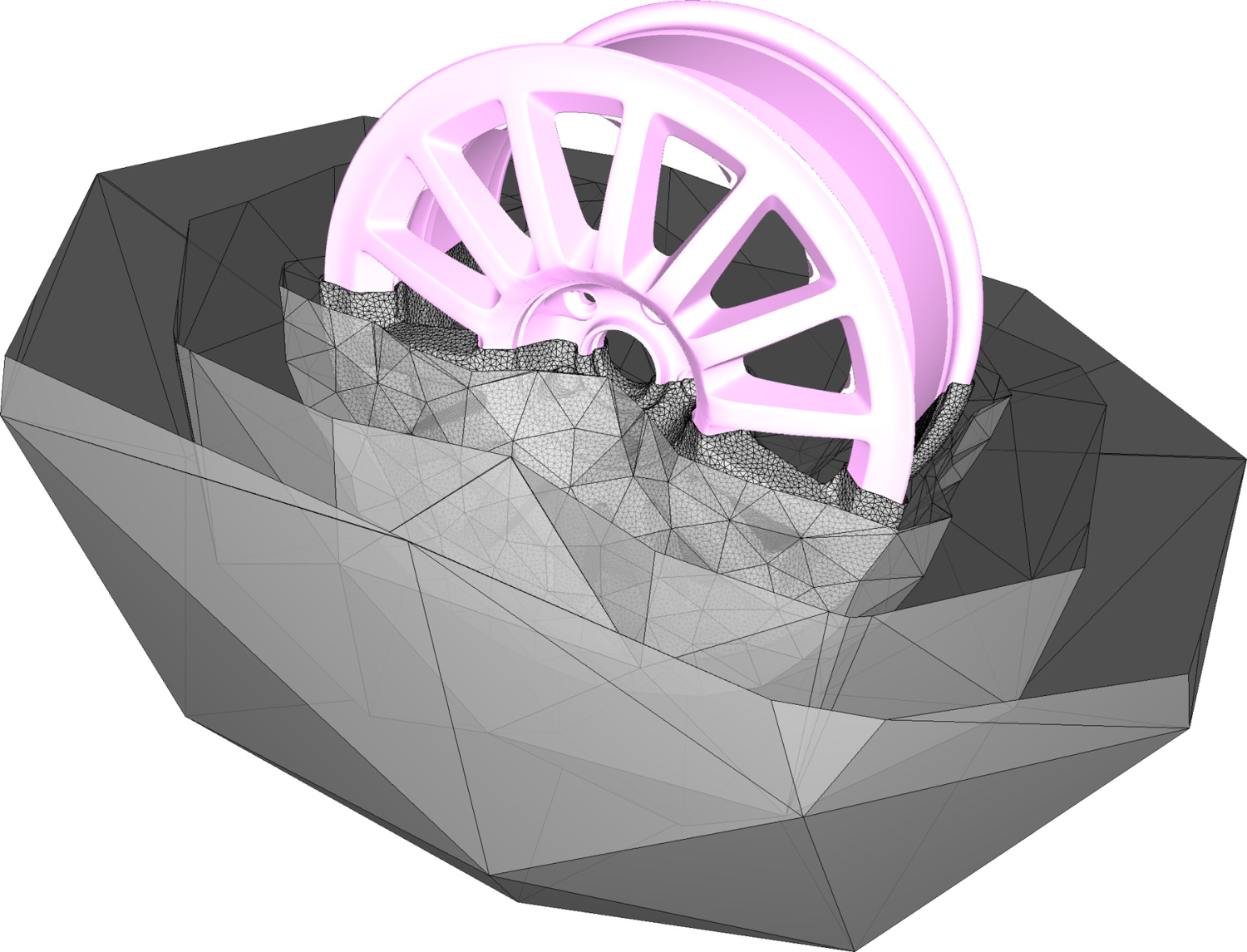 |
Alpha Wrapping with an Offset Cédric Portaneri, Mael Rouxel-Labbé, Michael Hemmer, David Cohen-Steiner, Pierre Alliez. ACM Transactions on Graphics 2022, to appear at ACM SIGGRAPH 2022. See CGAL Package. See youtube video (15 minutes) |
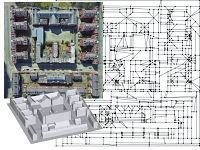 |
Simplification of 2D Polygonal Partitions via Point-line Projective Duality, and Application to Urban Reconstruction Julien Vuillamy, André Lieutier, Florent Lafarge, Pierre Alliez Computer Graphics Forum, 2022. |
 |
Progressive Discrete Domains for Implicit Surface Reconstruction Tong Zhao, Pierre Alliez, Tamy Boubekeur, Laurent Busé, Jean-Marc Thiery Computer Graphics Forum, Wiley, In press, Proceedings of the EUROGRAPHICS Symposium on Geometry Processing 2021 |
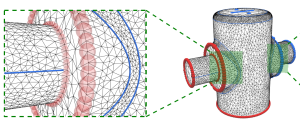 |
Delaunay Meshing and Repairing of NURBS Models Xiao Xiao, Pierre Alliez, Laurent Busé, Laurent Rineau Computer Graphics Forum, Wiley, In press, Proceedings of the EUROGRAPHICS Symposium on Geometry Processing 2021 |
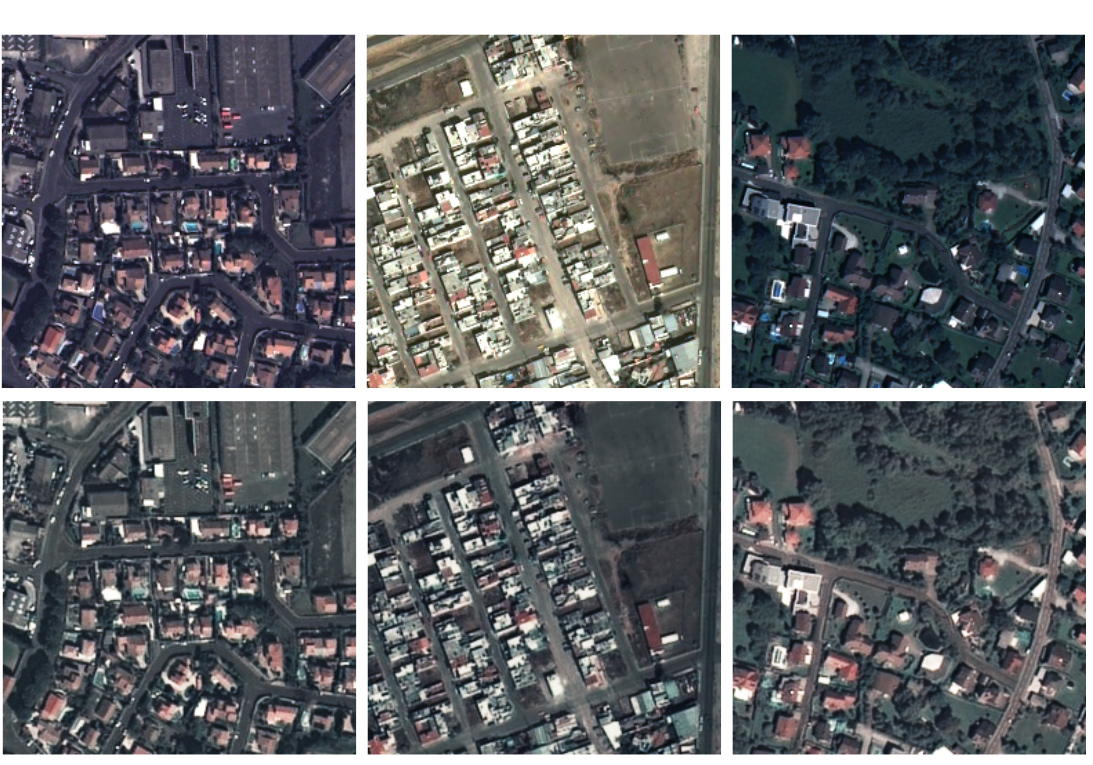 |
StandardGAN: Multi-source Domain Adaptation for Semantic Segmentation of Very High Resolution Satellite Images by Data Standardization. Onur Tasar, Yuliya Tarabalka, Alain Giros, Pierre Alliez, Sebastien Clerc. IEEE/CVF Conference on Computer Vision and Pattern Recognition EarthVision Workshop (CVPRW) Seattle, USA, 2020. Best paper award. |
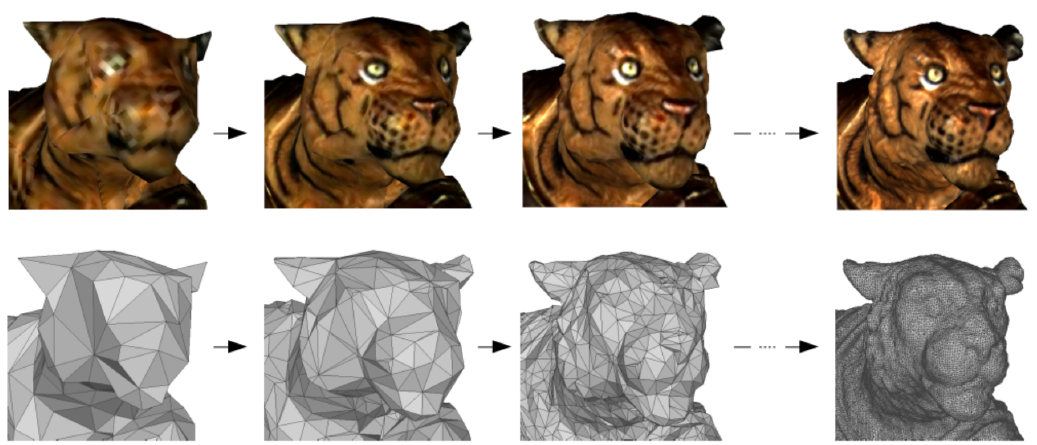 |
Cost-driven framework for progressive compression of textured meshes. Cédric Portaneri, Pierre Alliez, Michael Hemmer, Lukas Birklein, Elmar Schoemer. 10th ACM Multimedia Systems Conference, 2019. Best paper award. |
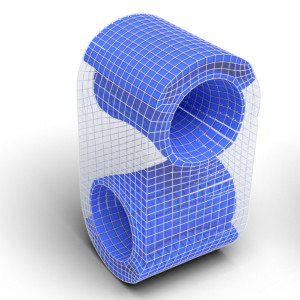 |
Selective Padding for Polycube-Based Hexahedral Meshing. G. Cherchi, Pierre Alliez, R. Scateni, M. Lyon, D. Bommes. Computer Graphics Forum, Wiley, 2019. |
 |
Curved Optimal Delaunay Triangulation Leman Feng, Pierre Alliez, Laurent Busé, Hervé Delingette, and Mathieu Desbrun.ACM Transactions on Graphics (SIGGRAPH), 37(4), Art. 61, 2018. |
 |
Variance-Minimizing Transport Plans for Inter-surface Mapping
Manish Mandad, David Cohen-Steiner, Leif Kobbelt, Pierre Alliez and Mathieu Desbrun. ACM Transactions on Graphics (SIGGRAPH), 2017. See also Supplemental Material. Abstract: We introduce an efficient computational method for generating dense and low distortion maps between two arbitrary surfaces of same genus. Instead of relying on semantic correspondences or surface parameterization, we directly optimize a variance-minimizing transport plan between two input surfaces that defines an as-conformal-as-possible inter-surface map satisfying a user-prescribed bound on area distortion. The transport plan is computed via two alternating convex optimizations, and is shown to minimize a generalized Dirichlet energy of both the map and its inverse. Computational efficiency is achieved through a coarse-to-fine approach in diffusion geometry, with Sinkhorn iterations modified to enforce bounded area distortion. The resulting inter-surface mapping algorithm applies to arbitrary shapes robustly, with little to no user interaction. |
Students / post-docs / engineers
– 2023: Moussa Bendjilali (Cifre PhD student, AlteIA)
– 2023: Armand Zampieri (Cifre PhD student, Samp AI)
– 2023: Rahima Djahel (Postdoc, EU project BIM2TWIN)
– 2023: Abir Affane (Postdoc, collaboration with AI Verse)
– 2023: Kushagra Gupta (intern from India)
– 2023: Gauthier Drumel (intern from Polytech Sophia Antipolis)
– 2022: Nissim Maruani (PhD student, école Polytechnique)
– 2022: Theo Aguilar (intern, Polytech Nice)
– 2022: Rudransh Agrawal (intern, IIT Kharagpur )
– 2022: Amaury Autric (Ecole Polytechnique)
– 2022: Jacopo Iollo (PhD student, Inria défi ROAD-AI)
– 2022: Daniel Zint (Postdoc, jointly with Geometry Factory)
– 2021: Kacper Pluta (Postdoc, EU project BIM2TWIN)
– 2021: Nissim Maruani (intern, école Polytechnique)
– 2021: Rao Fu (PhD student, GRAPES EU project)
– 2020: Paul-Vinh Lê (intern, Ecole des Ponts ParisTech)
– 2020: Lucas Dubouchet (geometry compression)
– 2019: Tong Zhao (PhD student, 3IA Côte d’Azur)
– 2018: Julien Vuillamy (PhD student, Dassault Systèmes)
– 2018: Vasudha Varadarajan (intern from India, on binary reconstruction)
– 2018: Tong Zhao (intern from Ecole des Ponts, on geometric descriptors and spectral reconstruction)
– 2018: Vincent Vadez (Cifre PhD student on simplification of satellites, with Dorea Technology)
– 2018: Flora Quilichini (PhD student on mesh compression)
– 2018: Fernando Ireta (post-doc on indoor localization and reconstruction)
– 2017: Onur Tasar (PhD student on semantic classification of satellite images)
– 2017: Leman Feng (intern from Ecole des Ponts on Higher order meshes)
– 2017: Vinay Datta Renigunta (Efficient solver for optimal transportation)
– 2017: Dmitry Anisimov (LOD reconstruction of urban scenes)
– 2017: Cédric Portaneri (Geometry compression)
– 2016: Come Le Breton (Mesh generation)
– 2015: Guillaume Matheron (intern from ENS Paris on optimal transportation)
– 2015: Maxim Torgonskiy (Mesh generation)
– 2015: Aditya Kusupati (IIT Bombay on anisotropic metrics)
– 2015; Mohammad Rouhani (post-doc on semantic classification)
– 2015: Emmanuel Maggiori (PhD student on classification of satellite images)
– 2015: Nicolas Douillet (culture 3D clouds)
– 2014: Jinjing Shen (visiting PhD student on isotropic meshing of NURBS surfaces)
– 2014: Devdeep Ray (intern on optimal transportation)
– 2014: Henrik Zimmer (post-doc)
– 2013: Renata Rego (post-doc on Robust feature extraction)
– 2013: Anmol Garg (Intern on Shape approximation)
– 2012: Kaimo Hu (post-doc on Robust surface remeshing)
– 2012: Thijs van Lankveld (Surface reconstruction for cultural heritage data)
– 2012: Clément Jamin (Parallel algorithms and shape detection)
– 2012: Yiyi Wei (Well-centered triangulations, co-advised with Mariette Yvinec)
– 2012: Manish Mandad (PhD on robust shape approximation with guarantees)
– 2012: Sven Oesau (Indoor scene reconstruction, co-advised with Florent Lafarge)
– 2012: David Bommes (Surface tiling)
– 2011: Xavier Rolland-Neviere (Watermarking of surface meshes, at Technicolor, co-advised with Gwenael Doerr)
– 2011: Simon Giraudot (Robust reconstruction of surfaces)
– 2011: Paul Seron (Reconstruction of urban scenes)
– 2011: Renata Nascimento (visiting PhD student on quadrangle surface tiling)
– 2011: Julie Digne (post-doc on robust shape reconstruction, now researcher at CNRS in Lyon)
– 2011: Sagar Chordia (shape approximation)
– 2010: Alain Tayeb (Meshing NURBS surfaces)
– 2010: Boris Dalstein (quadrangle surface tiling)
– 2009-present: Bertrand Pellenard (PhD on surface and domain tiling, defended Dec 18th 2012)
– 2009: Hugo Feree (ENS Lyon: probing implicit surfaces, now PhD student at Inria Nancy)
– 2009: Rahul Srinivasan (IIT Bombay: accelerating ODT mesh optimization and sliver removal)
– 2008: Amit Gupta (IIT Bombay: Poisson reconstruction for polygon soups)
– 2008: Saurabh Chakradeo (IIT Bombay: Fast intersections and projections for polyhedral surfaces)
– 2007: Ankit Gupta (IIT Bombay: PCA in CGAL and application to normal estimation), now at Stanford
– 2006-2009: Jane Tournois (PhD on mesh optimization), now at Geometry Factory.
– 2006: Lakulish Antani (IIT Bombay: mesh sizing using additively weighted Voronoi diagrams), now at UNC
– 2004: Abdelkrim Mebarki (master: placement of streamlines)
– 2004: Jérôme Gahide (progressive triangle mesh compression)
– 2003-2007: Marie Samozino (Ph.D.: reconstruction of surfaces from noisy point sets, co-advised with Mariette Yvinec), now Professor in Mathematics
– 2002: Mathieu Monnier (compression of 2D vectorial data)
Software
I am an avid user of the CGAL library. I am a CGAL editor and developer as well, implementing or participating to various projects: placement of streamlines from 2D vector fields, planar parameterization of triangle surface meshes, Principal Component Analysis, Surface reconstruction, Point Set Processing and 3D Isotropic Tetrahedron Mesh Generation and Optimization.
– EU ITN GRAPES (Learning, processing and optimising shapes)
– EU BIM2TWIN (digital twin for construction)
Past Projects
– ANR Loca-3D (indoor localization and mapping)
– Google X (geometry processing)
– ERC Proof of Concept TITANIUM
– ANR GIGA (national project about geometric inference and analysis)
– ANR GYROVIZ (national project for reconstructing urban scenes from localized photos and videos)
– Focus K3D (EU FP7 Coordination Action)
– AIM@SHAPE (EU Network of Excellence)
2023
– Advisory committee: EUROGRAPHICS annual conference
– Editor in chief, Computer Graphics Forum
– Programme committee: EUROGRAPHICS Symposium on Geometry Processing
– Thesis reviewer: Raphael Sulzer
– Thesis reviewer: Theo Deprelle
– Thesis reviewer: Claudio Mancinelli (University of Genova)
– Thesis committee: Florent Jousse (Inria and Université Côte d’Azur)
– Thesis commitee: Gaétan Bahl (Inria)
– HDR reviewer: Loic Landrieu (IGN)
2021
– Chair, EUROGRAPHICS PhD award committee
– Programme committee: EUROGRAPHICS Symposium on Geometry Processing
– Thesis reviewer: Pierre-Alain Langlois (Ecole des Ponts ParisTech)
– Thesis reviewer: Raphaël Groscot (Ceremade, Dauphine)
– Thesis committee: Yana Nehmé (INSA Lyon)
2019
– Program co-chair, SPM conference.
– Thesis committee: Siargey Kachanovich (Inria)
2018
– programme committee: EUROGRAPHICS Symposium on Geometry Processing
– HDR committee: Stefanie Wuhrer (Inria Grenoble)
– Thesis committee: Arnaud Bletterer (I3S Sophia Antipolis)
– Head of science, Inria center (for four years)
– programme committee: ACM SIGGRAPH 2017
– programme committee: EUROGRAPHICS 2017
– programme committee: EUROGRAPHICS Star reports
– programme committee: EUROGRAPHICS Symposium on Geometry Processing
– programme committee: EG Workshop on Graphics and Cultural Heritage
– thesis reviewer: Giorgio Marcias (CNR Pisa, Italy)
– thesis reviewer: Claudio Calabrese (University Roma, Italy)
– thesis reviewer: Florian Caillaud (LIRIS Lyon)
– thesis reviewer: Dmitry Anisimov (Univ. Lugano)
– thesis reviewer: Yannick Masson (University Paris Est)
– thesis reviewer: Ana Vintescu (Telecom ParisTech)
– HDR committee: Maks Ovsjanikov (Ecole Polytechnique)
2016
– programme committee: ACM SIGGRAPH 2016
– programme committee: EUROGRAPHICS 2016
– programme committee: Geometric Modeling and Processing 2016
– programme committee: Shape Modeling International 2016
– programme committee: EUROGRAPHICS Symposium on Geometry Processing
– programme committee: EUROGRAPHICS Workshop on Graphics & Cultural Heritage
– thesis reviewer: Ludovic Blache (CReSTIC-SIC Reims-Châlons-Charleville)
– thesis reviewer: Ruqi Huang (Inria Saclay)
– thesis reviewer: Li Wang (Inria Grenoble)
– thesis comittee: Mael Rouxel-Labbé (Inria)
2015
– thesis reviewer: Jérémy Levallois (LIRIS)
– thesis committe: Rodolphe Vaillant (Université Paul Sabatier / University of Victoria)
– paper committee, EUROGRAPHICS Symposium on Geometry Processing (Graz, Austria)
– programme committee, Digital Heritage 2015
– thesis reviewer: Gilles-Philippe Paillé (Université de Montréal)
2014
– thesis reviewer: Louis Cuel (Université de Savoie)
– thesis committee: Jean luc Peyrot (CNRS-Université de Nice)
– thesis reviewer: Alexandre Boul’ch (Ecole des Ponts ParisTech)
– Joined Horizon 2020 Advisory Group for Societal Challenge 6 ‘Europe in a changing world – Inclusive, Innovative and Reflective Societies.
– European paper co-chair, Geometric Modeling and Processing (Singapore)
– program committee, International Conference on 3D Computer Vision
– program committee, Shape Modeling International
– thesis reviewer: Ricard Campos (University of Girona)
– joined the Steering Board of the EUROGRAPHICS Workshop on Graphics and Cultural Heritage
– thesis reviewer: Henrik Zimmer (University of Aachen)
– program committe, EUROGRAPHICS Workshop on Graphics and Cultural Heritage
– paper committe, EUROGRAPHICS Workshop on Urban Data Modelling and Visualisation
– paper committee, EUROGRAPHICS Symposium on Geometry Processing (Cardiff, UK)
– thesis reviewer: Thierry Guillemot (Telecom ParisTech)
2013
– paper committee, ACM Virtual Reality International Conference
– local board member for Digital Heritage 2013
– thesis committee: Ricardo Uribe-Lobello (LIRIS, CNRS Lyon)
– thesis committee: Yannick Verdie (Inria)
– thesis reviewer: Thijs van Lankveld (Utrecht)
– thesis committee: Yannick Verdie (Inria)
– thesis committee: Adrien Maglo (Centrale Paris)
– thesis committee: Noura Faraj (Telecom ParisTech)
– joined board of Computer Aided Geometric Design
– paper committee, Shape Modeling International 2013
– paper committee, Eurographics Symposium on Geometry Processing (Genova, Italy)
– HDR thesis reviewer: Guillaume Lavoue (Universite de Lyon)
2012
– thesis reviewer, Nicolas Mellado, (Inria Bordeaux)
– thesis reviewer, David Bommes (RWTCH Aachen)
– invited speaker, MICCAI workshop on Mesh Processing in Medical Image Analysis (Nice).
– invited speaker, 3DIMPVT: 3D Imaging, Modeling, Processing, Visualization and Transmission (Zurich).
– paper committee, EUROGRAPHICS conference (Cagliari, Italy)
– paper committee, Eurographics Symposium on Geometry Processing (Talinn, Estonia)
– program committee, International Workshop on Point Cloud Processing (in conjunction with CVPR)
– invited speaker, Advances in Architectural Geometry (Paris).
2011
– thesis reviewer: Vincent Vidal (Universite de Lyon)
– HDR thesis reviewer: Raphaelle Chaine (Universite de Lyon)
– thesis committee: Patrick Mullen (Caltech)
– programme committee, VAST International Symposium on Virtual Reality, Archaeology and Cultural Heritage
– programme committee, Sibgrapi 2011
– paper committee, Eurographics Symposium on Geometry Processing
– programme committee, Shape Modeling International
– thesis reviewer: Clement Courbet (Ecole Centrale Paris)
– thesis committee: Marcio Cabral (INRIA Sophia)
– thesis reviewer: Sahar Hassan (University of Grenoble)
2010
– joined board of Elsevier Graphical Models
– thesis reviewer: Julie Digne (ENS Cachan)
– paper co-chair, Pacific Graphics 2010
– programme committee, Shape Modeling International
– programme committee, ACM Symposium on Solid and Physical Modeling
– paper committee, Eurographics Symposium on Geometry Processing
– scientific committee: Advances in Architectural Geometry
– thesis committee: Mathieu Bredif (Telecom ParisTech and IGN, France)
– thesis reviewer: Thierry Stein (INRIA Rhone Alpes)
2009
– associate editor of the ACM Transactions on Graphics
– short paper co-chair, Eurographics
– programme committee, IMA Mathematics of Surfaces XIII conference.
– programme committee, SIAM/ACM Joint Conference on Geometric and Physical Modeling
– paper committee, Eurographics Symposium on Geometry Processing
– paper committee, Pacific Graphics
– thesis reviewer: Patrick Labatut (ENS Paris)
– thesis committee: Jean-Marie Favreau (University of Clermont-Ferrand)
– thesis committee: Jane Tournois (INRIA Sophia)
2008
– paper co-chair, Eurographics Symposium on Geometry Processing
– paper committee, EUROGRAPHICS
– paper committee, Pacific Graphics
– paper committee, Shape Modeling International
– paper committee, ACm Symposium on Solid and Physical Modeling
– paper committee, Symposium on 3D Data Processing, Visualization and Transmission
– thesis reviewer: Christopher Dyken (University of Oslo)
– thesis reviewer: Johan Seland (University of Oslo)
2007
– paper committee, SIGGRAPH
– paper committee, CAD/Graphics
– paper committee, Pacific Graphics
– paper committee, Shape Modeling International
– paper committee, ACM Symposium on Solid and Physical Modeling
– paper committee, Eurographics Symposium on Geometry Processing
2006
– paper committee, Pacific Graphics
– associate editor of the Visual Computer
– associate editor of Computers & Graphics
– part of the french ANR project GEOTOPAL
– thesis reviewer: Martin Marinov (RWTH Aachen)
– paper committee, ACM Symposium on Solid and Physical Modeling
– paper committee, Eurographics Symposium on Geometry Processing
– paper committee, IEEE International Conference on Shape Modeling and Applications
2005
– Video and Multimedia presentation program committee, SOCG 2005
– paper committee, EUROGRAPHICS Symposium on Geometry Processing 2005
– paper committee, EUROGRAPHICS 2005
– paper committee, Pacific Graphics 2005
– thesis reviewer: Christian Rossl (MPII Saarbruck), Raphaele Balter (University of Rennes)
– member of thesis committee:Marie-Claude Frasson (University of Nice), Guillaume Lavoue (University of Lyon), Gabriel Peyre (Ecole Polytechnique)
2004-2006
– ACI GeoComp 2004-2007
– AIM@SHAPE EU Network of Excellence (workpackage leader)
2004
– organizing co-chair, Second Eurographics Symposium on Geometry Processing 2004
– paper committee, Eurographics Symposium on Geometry Processing 2004
– paper committee, Eurographics 2004
– paper committee, Pacific Graphics 2004
– paper committee, Shape Modeling International 2004
– member of thesis committee: Frederic Payan